
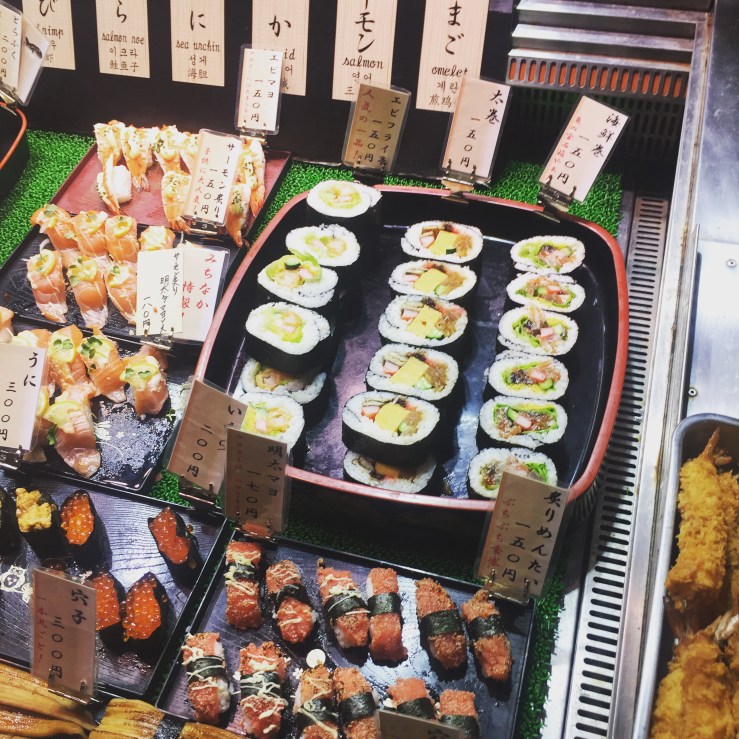
Sushi for sale in Karato Fish Market, Shimonoseki
Tsukiji fames itself for being the largest sea food market in Japan, and the largest market of its type in the world. Tsukiji draws in the crowds almost every morning, mostly tourists who have all come to sample from the swarmed sushi restaurants and sashimi-don stalls that have established themselves on the narrow streets just outside of the famed fish auction. Tuskiji’s popularity is rightfully earned, there is something alluring about possibility of navigating packed-out markets whilst the market workers try desperately to still do their job despite the crowds. And the promise of cheap exotic cuisine, even at six or seven o’clock in the morning is temptation in of itself.
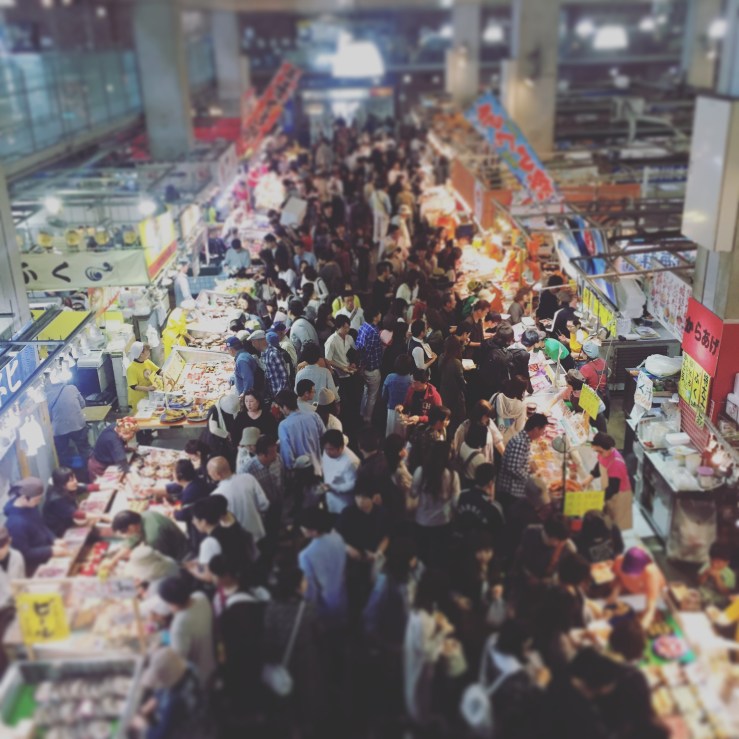
 That early morning pilgrimage to Tokyo’s ‘secret’ breakfast spot has become something like folklore for visitors to the nation’s capital. I approached the market myself in December, excited and hungry for a chance to sample ‘the best sushi in Japan’. However, I found the throngs of people, simply distracted from the often mentioned ‘otherworldliness’ of the place, and more importantly, they got between me and the sushi.
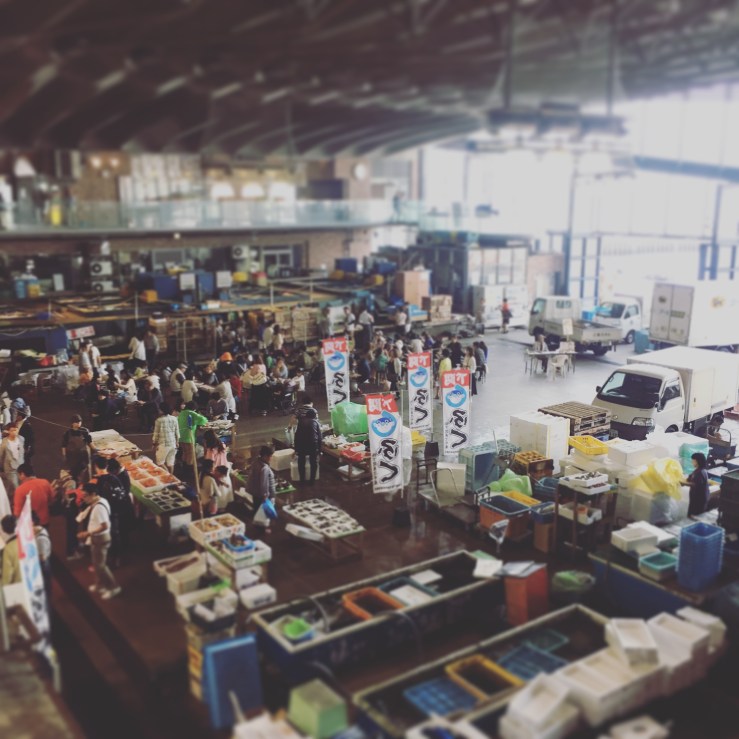
Tsukiji remains a must see on the Tokyo itinerary, but with the market’s future in doubt, and it’s increasing popularity with overseas visitors, it’s difficult to see what direction the market is heading in the future. But for those wishing to escape the nation’s capital and find far more ‘off-road’ locations to get your seafood fix, then Japan has plenty to offer yet. Karato Fish Market (pictured) has much of the same allure of Tokyo’s infamous Tsukiji, but with much less crowds, and far easier access to delicious, and fresh seafood. It’s very much ‘Tsukiji-light’, a much smaller and less dense fish market nestled on Kamon Warf in Shimonoseki, Yamaguchi Prefecture, just over the water from Kitakyushu, Fukuoka Prefecture. However, the market is far from just being a ‘sample sized’ experience, it stocks as much variety and quality as you’d find in Tokyo, but without the early morning wakeup call or the tourist price tag.
Typically, on arriving at a stall you are given a plastic box and a pair of tongs to help you fill it with whatever you can grab first. There is some of the sushi-mania seen in tsukiji present here, but the trays are easily refilled, the salmon is popular, as well as the fatty Toro, the tuna belly, sold here at incredibly cheap prices, I grabbed a slice of that before it disappeared. After you have chosen the assistant will total it up and charge you, less than £10 for a sizable selection. The rest of the market has plenty to offer too, dried fish goods are on sale, as well as a myriad of aquatic creatures plucked from the depths for you to take home, I’ve no advice on how to serve them however.
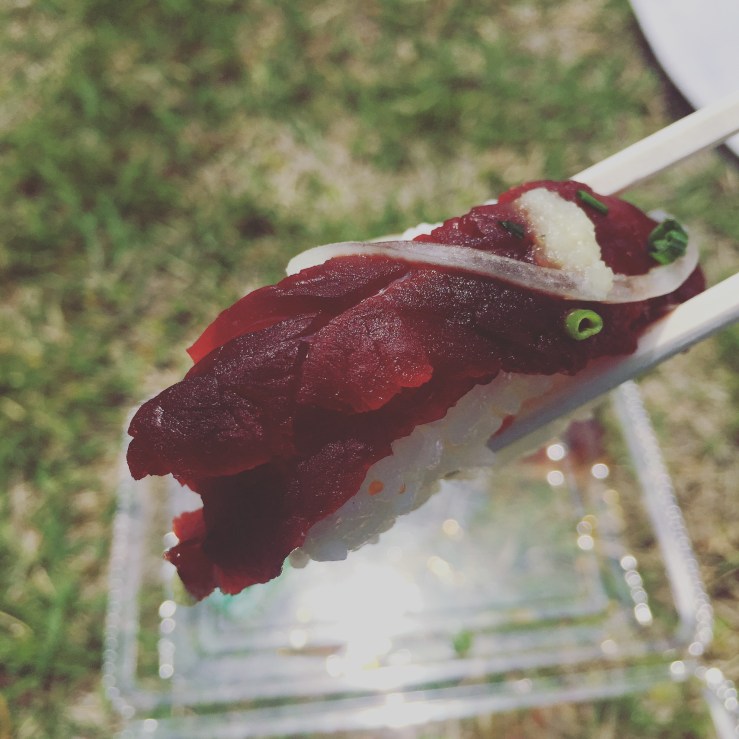 The market exists as a ‘hidden gem’ in much the same way Tsukiji once did. The building is somewhat unassuming, and on the days I have visited most of the crowds seemed to be heading to the nearby aquarium or children’s park. But inside the unassuming building is an open nest of busy stalls, selling fresh sushi for as little as 100 Yen, and of a much higher quality that your typical ‘kaiten’ sushi joint too. Karato offers a startling array of choice, including whale meat and the local speciality Fugu, the infamous dish which is famous for poison if not prepared correctly. Here the fugu is sold in sets, pre-cut and displayed fan-like on plates which are kept refrigerated somewhere out of sight. Plastic mock-ups of your fugu dinner are displayed out front, you simply need to point to order. Unlike the other fish on sale there are no ‘do-it-yourself’ kits for fugu here, and probably sensibly so. The area remains where the majority of Japan’s fugu harvest is caught and processed, and the city of Shimonoseki is a little mad for the stuff, you’ll find fugu designs everywhere in the city, and plastered on everything in the gift shops. Even the fabric on the bus seats have a fufgu design.
 Shimonoseki is the freshest place to try it, many restaurants will serve it as a set meal. It’s not cheap however, often prices start from at least 5000 Yen, it’s a delicacy, perfectly safe when prepared by a professional. I found the taste is light and delicious, like a lot of Japanese food the flavours a subtle. It’s almost always served thinly sliced, translucent looking on the plate, often with soy, onion and wasabi as seasonings. The skin can also be served shredded; it has a texture like jelly.
Karato Market smells fresh, it’s chilled and air-conditioned inside, keeping the meat safe from the spring heat. Most people took their sushi to eat outside on the water front, but the market has another secret, on the roof top is a grassed space to eat your sushi, with an amazing view of the Kanmon strait, looking over to Kyushu island, Japan’s third largest. The atmosphere of Karato fish market is far more relaxed than Tsukiji. It’s easier to enjoy your meal, and go back for seconds if you desire. There is little of the mania of Tsukiji, and certainly less chance of being run down by a forklift truck whilst visiting. For those visiting the southern part of Japan, Shimonoseki is easily accessed from Kyushu or from Hiroshima, with direct trains available, and the market itself only a short and well-advertised bus journey. Don’t expect the same kind of experience as you’d find in Tsukiji, Karato is a local’s market of a much smaller size, but if like me you find that Tsukiji simply didn’t allow for enough access to its main attraction, then Karato is fine alternative. A must for seafood lovers and probably the best place in Japan to try one of its most famous specialties.
 The World is Quiet